Case brushing
We follow existing grain direction where possible, mask polished surfaces and avoid aggressive material removal on thin lugs or plated cases.
Restoration can improve a watch, or it can erase the very details that made it meaningful. This page explains how FocusCast approaches case, bracelet, dial-adjacent and vintage work responsibly.
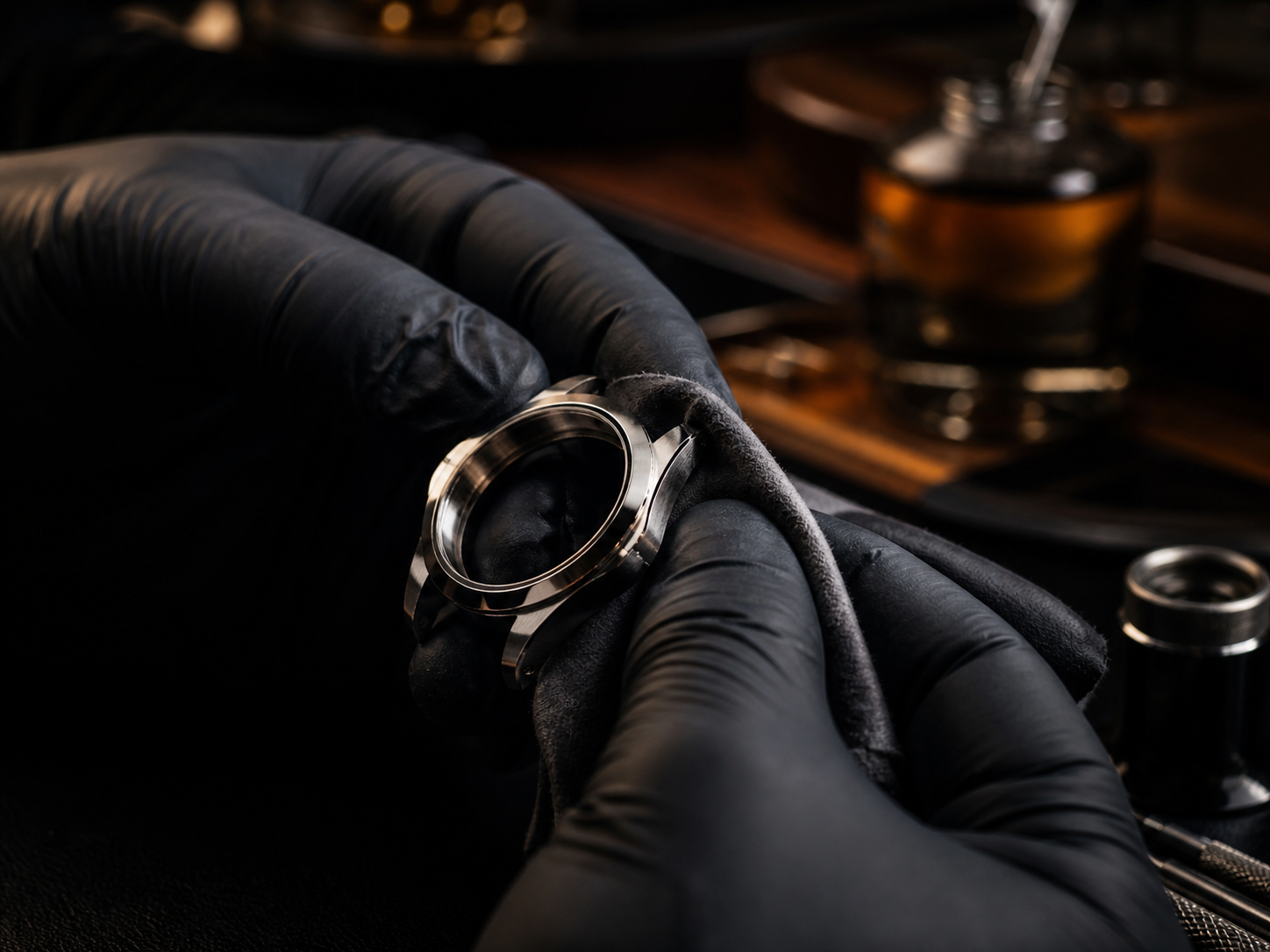
Many watches arrive with the same question: can you make it look new? The better question is whether looking new is the right goal. We study the case shape, brushing direction, bevels, engravings, plating and sentimental value before suggesting a finish.
The best restoration is the one that still lets the watch recognise itself.
Restoration works best when expectations are clear. We explain where appearance can be improved, where preservation matters more, and which details should remain untouched to protect the character of the watch.
We follow existing grain direction where possible, mask polished surfaces and avoid aggressive material removal on thin lugs or plated cases.
Polish is controlled, not automatic. Deep dents may remain visible if removing them would distort the case or erase hallmarks and reference details.
Many acrylic crystals can be improved with careful polishing. Replacement is suggested only when cracks, tension marks or poor fit make repair unsuitable.
These usually require replacement rather than polishing. We consider gasket fit, thickness, bevel and water resistance impact.
Ultrasonic cleaning, clasp checks, link screws and pin security are often more important than shine. Safety comes before appearance.
We handle dial and hand work conservatively. Patina is not dirt. Lume, printing and aged lacquer require risk discussion before any intervention.
Vintage watches can be fragile because previous moisture, radium-era materials, degraded lacquer, obsolete parts or incorrect past repairs may hide under the surface. We take extra photos and explain what not to disturb.
Modern watches used every day often benefit from a reliability-led approach: crown, gaskets, bracelet security, cleaning and timing. Cosmetic work is optional and should never hide unresolved mechanical faults.
Share front, side, caseback, clasp and crown photos before committing to a restoration. Early images help identify wear patterns, previous refinishing and likely parts needs.