Care guide · Malaysia humidity
Why a watch can fail after a small splash.
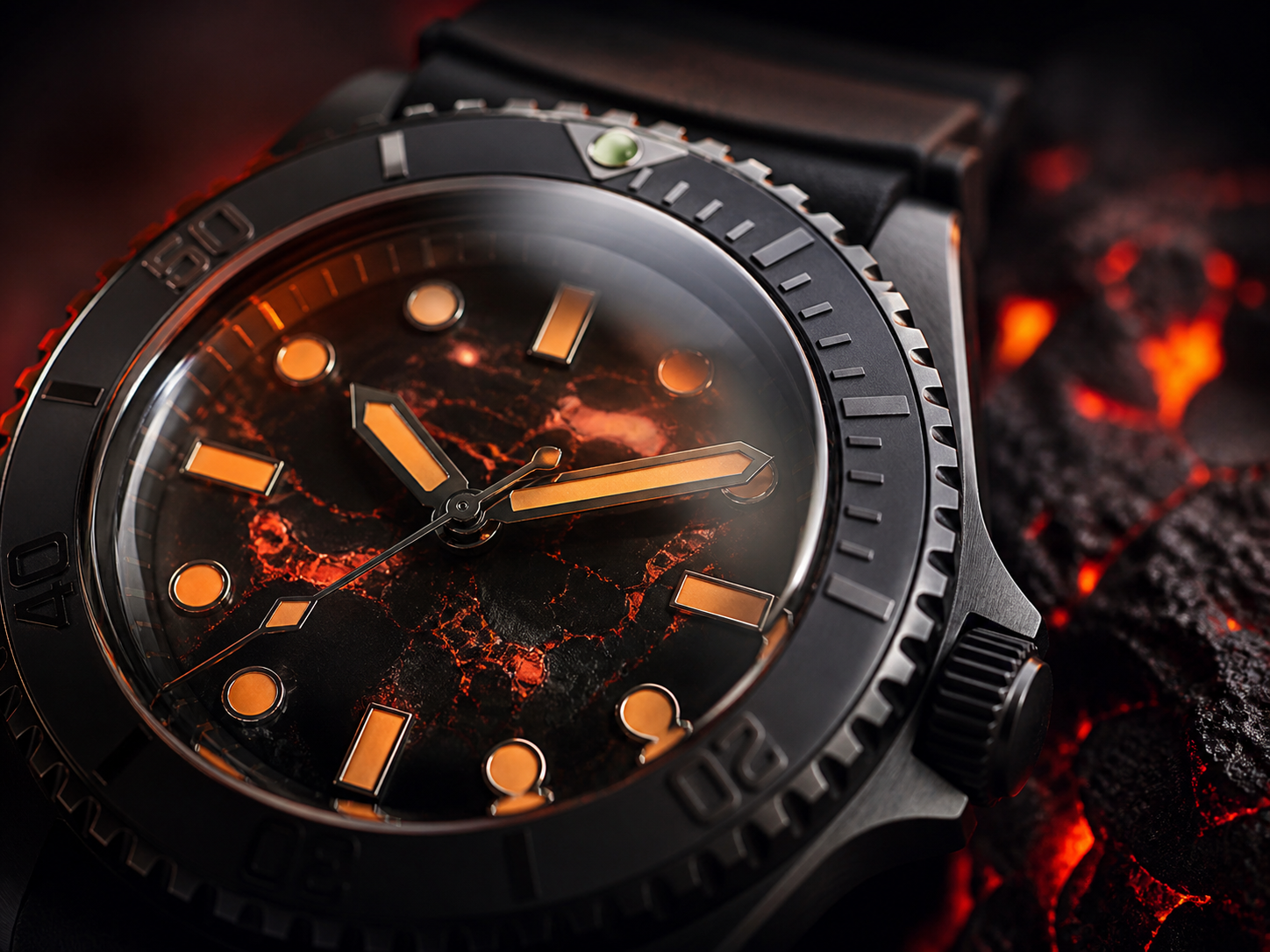
Water resistance is not a permanent feature. It depends on case construction, crown condition, gasket age, crystal fit and how the watch is used. In a humid climate, a watch may show mist under the crystal after a short rain exposure or after moving between air conditioning and heat.
Owners often assume that a printed depth rating means the watch is safe forever. In practice, seals compress and harden. A crown tube can wear. A caseback may have been opened without gasket replacement. Pressure testing provides a snapshot of condition, not a lifetime guarantee.
- Test water resistance after battery replacement or case opening.
- Do not operate the crown or pushers when the watch is wet.
- Dry the watch before storing it in a closed box.
- Seek service quickly if moisture appears under the crystal.
Mechanical service · Reliability
How to know when a mechanical watch needs service.
A watch does not need to stop completely before it deserves attention. Lower power reserve, a gritty winding feel, poor timekeeping, rotor noise, date-change issues or sudden time loss can indicate that lubrication has aged or parts are wearing.
Service intervals depend on movement design, environment and use. A watch worn daily in humidity and heat may need attention sooner than a watch stored carefully and worn occasionally. The safest approach is to combine owner symptoms with timing and amplitude checks rather than rely on a fixed number of years only.
Restoration · Collector advice
Polish or preserve: the question that changes a watch.
Polishing can make a watch more attractive at first glance, but aggressive work can round edges, soften bevels and remove metal that can never be replaced. For collectible watches, original geometry and surface history may matter more than shine.
Preservation-first restoration means cleaning, stabilising and improving only what should be improved. A daily wearer may deserve a light refresh; an heirloom may deserve restraint. The right decision depends on value, rarity, case thickness, engraving depth and owner preference.
Quartz repair · Diagnosis
When a battery change is not enough.
If a quartz watch stops repeatedly after new batteries, the battery is probably not the only issue. Moisture, dirty wheels, damaged coil, circuit problems or incorrect battery installation can cause high consumption or intermittent running.
A proper quartz diagnostic checks more than voltage. It reviews contacts, coil continuity, stepper behavior, stem setting and calendar load. This prevents the cycle of repeated battery changes that never solves the fault.
Timing · Everyday risks
Magnetism, impact and why watches suddenly run fast.
Magnetism can make a mechanical watch run unusually fast because hairspring coils may cling together. Everyday sources include magnetic clasps, speakers, tablets, phone accessories and some bags. Impact can also change timing or damage pivots.
Demagnetising is sometimes quick, but not every fast watch is magnetised. Timing traces and symptom history matter. A watch that remains unstable after demagnetising may need deeper service.